The History of Green Island: From Aboriginal Sea Country to a Pioneering Great Barrier Reef Tourism Destination
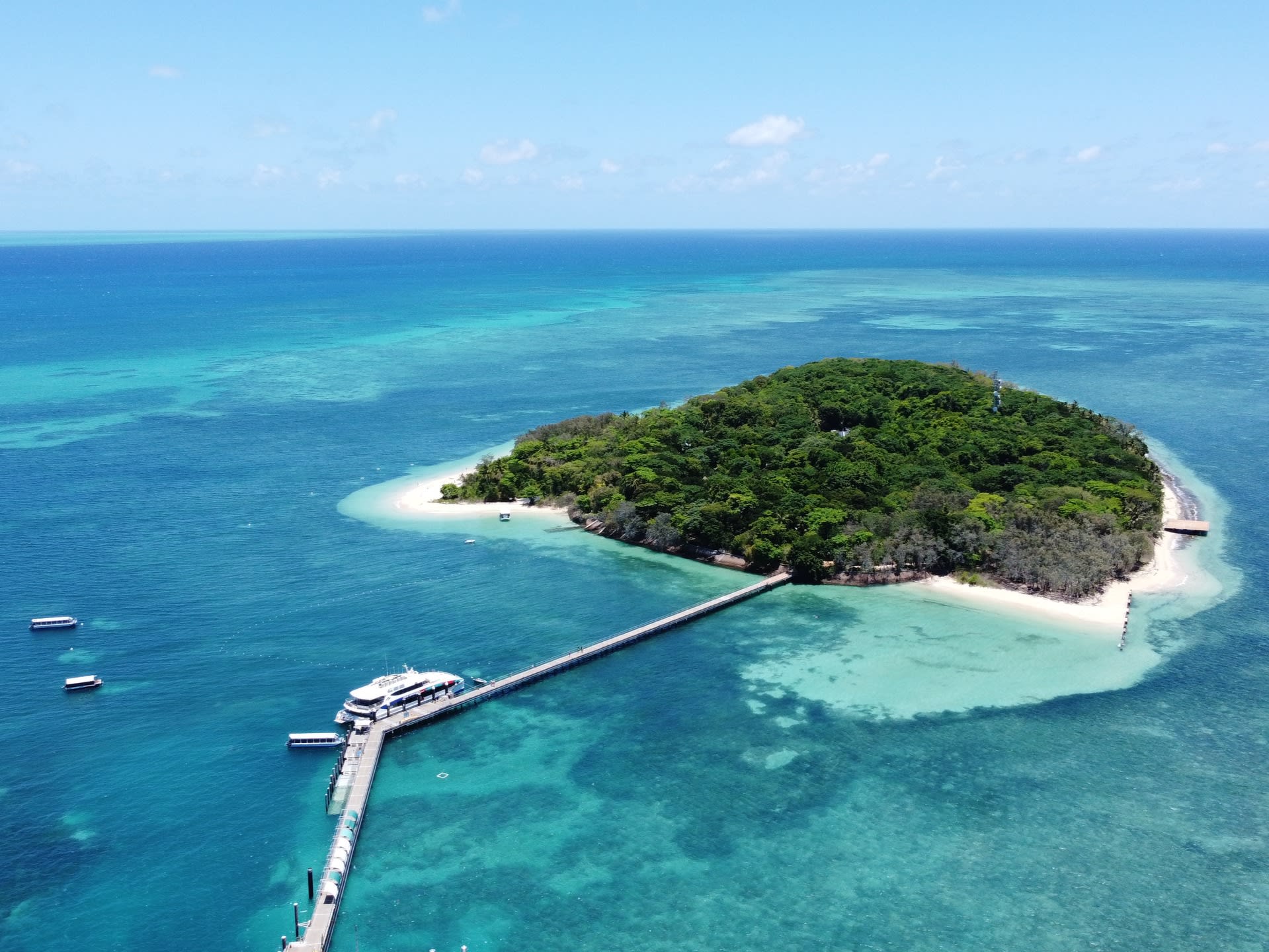
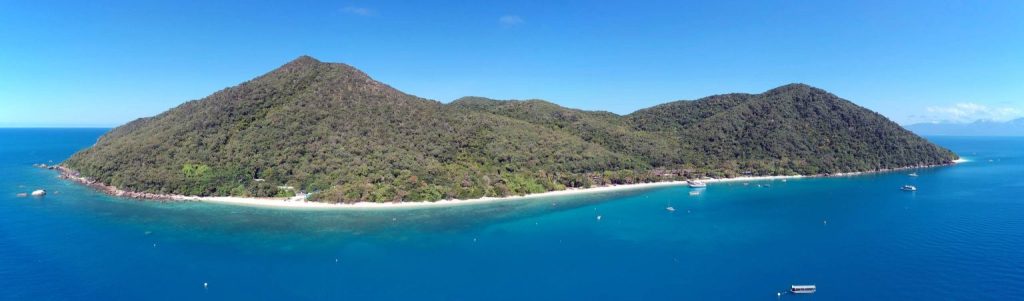
Located approximately 27 kilometres offshore from Cairns, Green Island is one of the most historically significant islands on the Great Barrier Reef. Famous for its beautiful tropical rainforest, surrounding coral reefs and clear turquoise waters, the small coral cay has played an extraordinary role in the development of Australian marine tourism.
While thousands of visitors travel to Green Island every year to experience its beaches, snorkelling and marine life, relatively few know just how much history is associated with this little island.
Green Island has been a traditional fishing and cultural area for Indigenous Australians for thousands of years. It was later used by fishermen, sea cucumber harvesters and shipwreck survivors before becoming one of Queensland’s earliest organised tourist destinations.
It was also the birthplace of several remarkable tourism innovations, including the world’s first glass-bottom boat and one of the world’s earliest stationary underwater observatories.
Over the years, Green Island has been home to pioneering underwater photographers, a crocodile farm, an underwater cinema, historic hotels and a succession of tourism operators who helped introduce the Great Barrier Reef to visitors from around the world.
Today, Green Island remains one of the most recognisable destinations on the Great Barrier Reef, with a history that is every bit as remarkable as its natural beauty.
1. Before European Settlement: The Traditional Owners of Green Island
Long before European explorers arrived in Far North Queensland, Green Island was an important part of the traditional sea country of Aboriginal communities.
Known traditionally as Wunyami, the island and surrounding reef have strong cultural connections with the Guru-Gulu Gungandji people, who maintain an ongoing connection to the area.
The wider Cairns region is also associated with the neighbouring Yidinji and Mandingalbay peoples.
For generations, Indigenous communities used the island and its surrounding waters for fishing, hunting and gathering seafood. The reef provided an abundance of marine resources, while the island offered shelter and access to an environment rich in wildlife.
Green Island also held cultural significance, with historical accounts recording its use for traditional ceremonies, including male initiation ceremonies.
The relationship between the Traditional Owners and Green Island is much older than the island’s modern tourism industry. It is important to recognise that the island was never simply an unoccupied tropical paradise waiting to be discovered by Europeans.
Today, the Guru-Gulu Gungandji people continue to have an important connection with Wunyami and its surrounding marine environment.
2. Captain Cook Arrives in 1770 and Names Green Island
The first recorded European charting of Green Island occurred during Captain James Cook’s voyage along Australia’s east coast in 1770.
On 10 June 1770, while navigating the Great Barrier Reef aboard HMS Endeavour, Cook recorded a small green island on his charts.
He named it after Charles Green, the ship’s astronomer and chief observer, who was travelling with the expedition.
The name Green Island has remained ever since.
During the early nineteenth century, other European explorers and navigators passed through the region, adding further information to maritime charts.
Captain Phillip Parker King visited the area in 1819, while later expeditions also contributed to the mapping of the reef and surrounding coastline.
Despite these early visits, Green Island remained largely isolated from permanent European settlement for several decades.
3. The 1850s: Fishermen and the Sea Cucumber Industry
One of the earliest commercial industries established on Green Island was the harvesting and processing of beche-de-mer, also known as sea cucumber.
During the nineteenth century, sea cucumber was a valuable commodity in Asian markets, where it was traditionally used as food.
The waters surrounding northern Queensland contained substantial populations of sea cucumbers, attracting fishermen and commercial operators.
Historical accounts identify a fisherman named J.V.S. Mein as establishing a beche-de-mer processing station on Green Island around 1855–1857.
The processing of sea cucumber involved harvesting the animals, boiling and smoking them, then drying them for transportation and sale.
Conditions were difficult, with workers exposed to tropical weather, isolation and the challenges of operating from a remote island.
The industry continued around Green Island for many decades, although the number of sea cucumbers eventually declined.
Other fishing operators also established temporary bases around the island. One notable figure was George Lawson, known locally as Yorkey, who operated a fishing station in the late nineteenth century.
The early fishing industry was an important part of Green Island’s history, although it was also associated with the difficult and sometimes violent frontier conditions of colonial northern Queensland.
Historical records document serious violence involving Aboriginal and Islander workers during this period, an important but often overlooked part of the island’s past.
4. Shipwrecks, Coconut Trees and the First Accommodation
Green Island’s position within the Great Barrier Reef meant that ships travelling along the Queensland coast faced considerable navigational hazards.
Reefs, changing weather and poorly charted waterways resulted in numerous shipwrecks around the island and surrounding waters.
In 1889, coconut trees were planted around parts of Green Island to provide food, drink and shelter for sailors who might become stranded following a shipwreck.
The coconuts were an important survival resource, particularly for people who found themselves isolated from the mainland.
During this period, simple grass huts were also constructed to provide accommodation for fishing and hunting parties.
These basic structures were among the earliest forms of visitor accommodation on Green Island.
They were not luxury holiday facilities, but they established the beginnings of an industry that would eventually transform the island into a major tourism destination.
5. The 1890s: Green Island Becomes a Popular Picnic Destination
By the late nineteenth century, Green Island was becoming increasingly popular with residents of Cairns.
As Cairns developed following its establishment in 1876, local residents began exploring the surrounding coastline and islands for recreational activities.
Green Island was particularly attractive because of its sheltered beaches, tropical vegetation and surrounding coral reefs.
Organised pleasure cruises to the island commenced around 1890, with a local coaster named the Zeus providing trips for visitors.
These early excursions were relatively simple affairs, often involving fishing, picnicking and spending time on the island.
Visitors had to accept that travelling offshore was considerably more difficult than it is today, with vessels dependent on weather conditions and available transport.
Nevertheless, Green Island was already establishing itself as one of the region’s favourite recreational destinations.
6. 1906: Green Island Becomes a Recreational Reserve
An important milestone occurred in 1906 when Green Island was declared a Recreational Reserve under the control of Cairns Council.
This recognised the island’s importance as a public recreational destination and helped establish a framework for its future management.
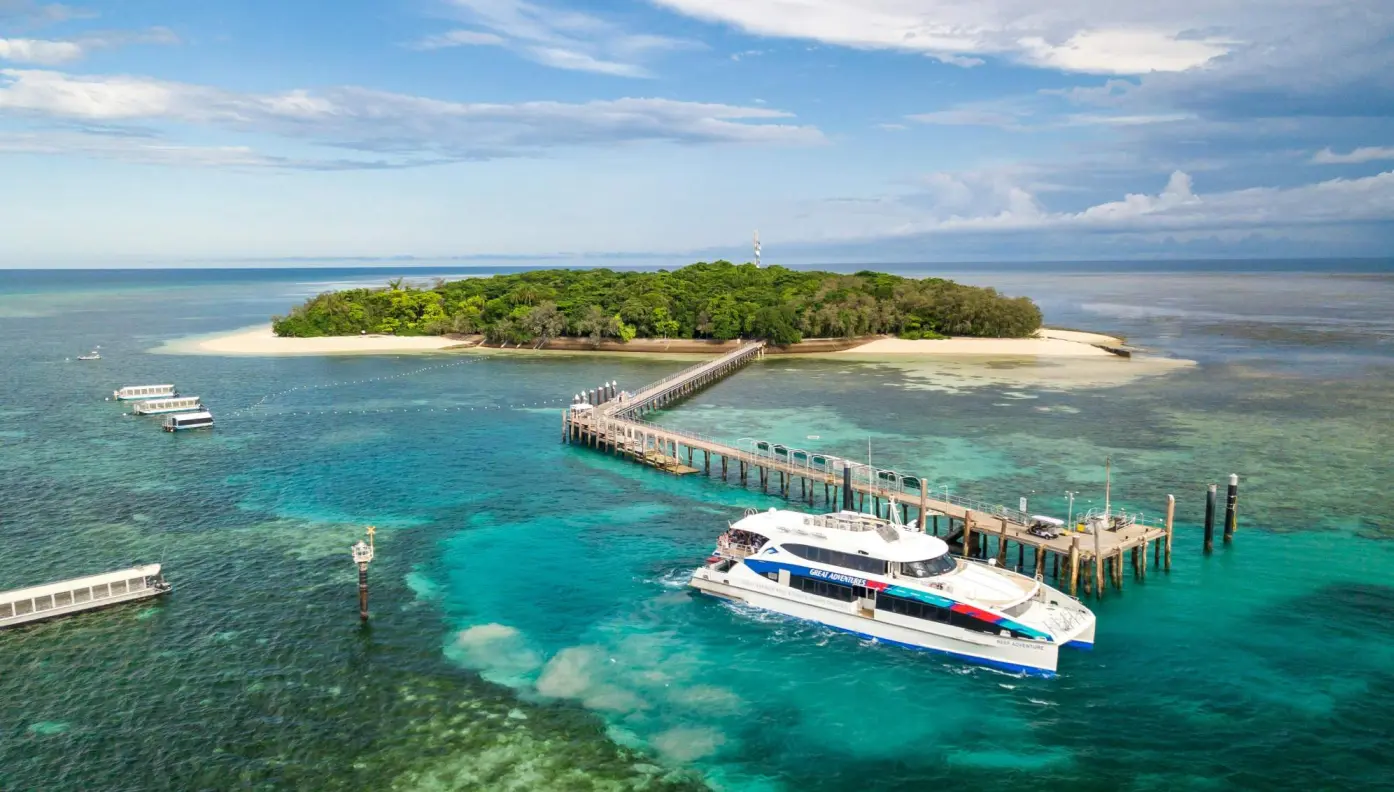
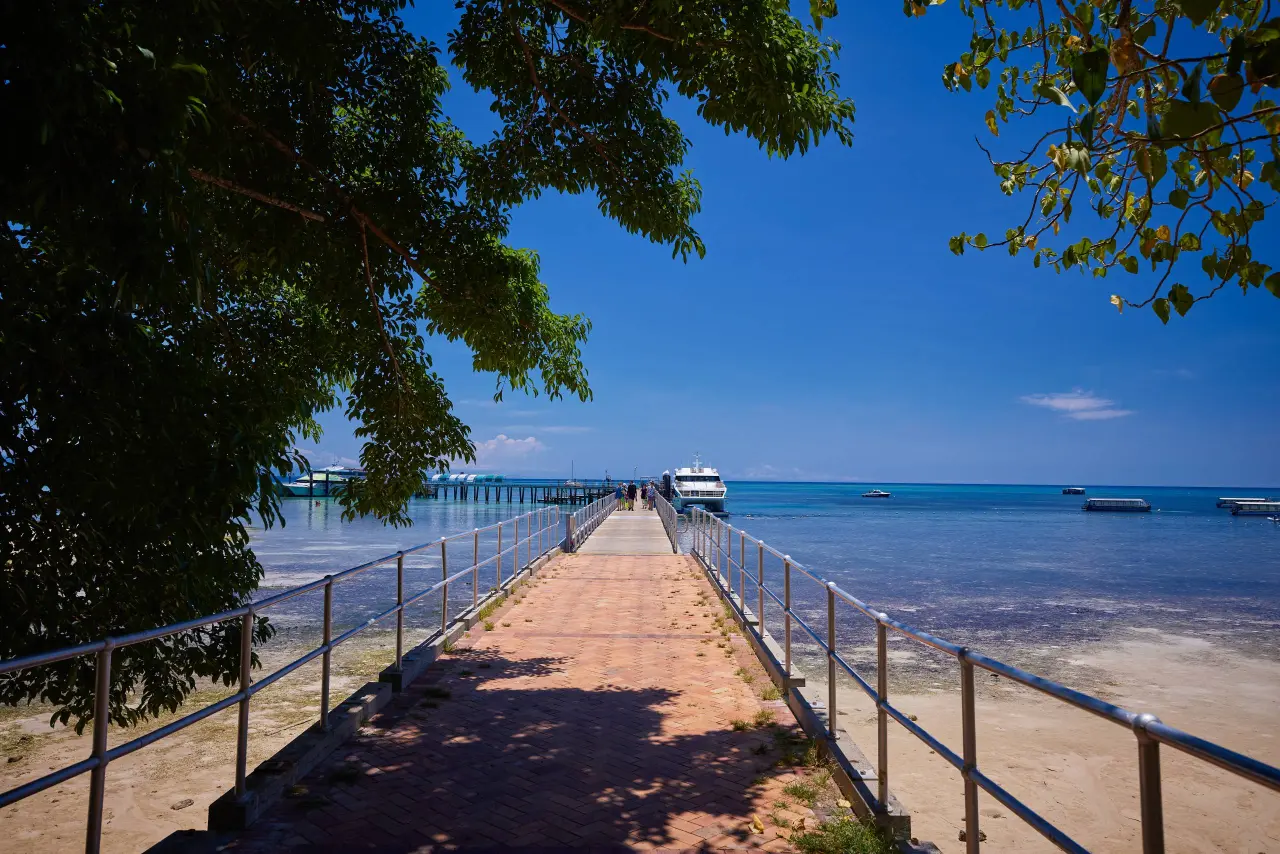
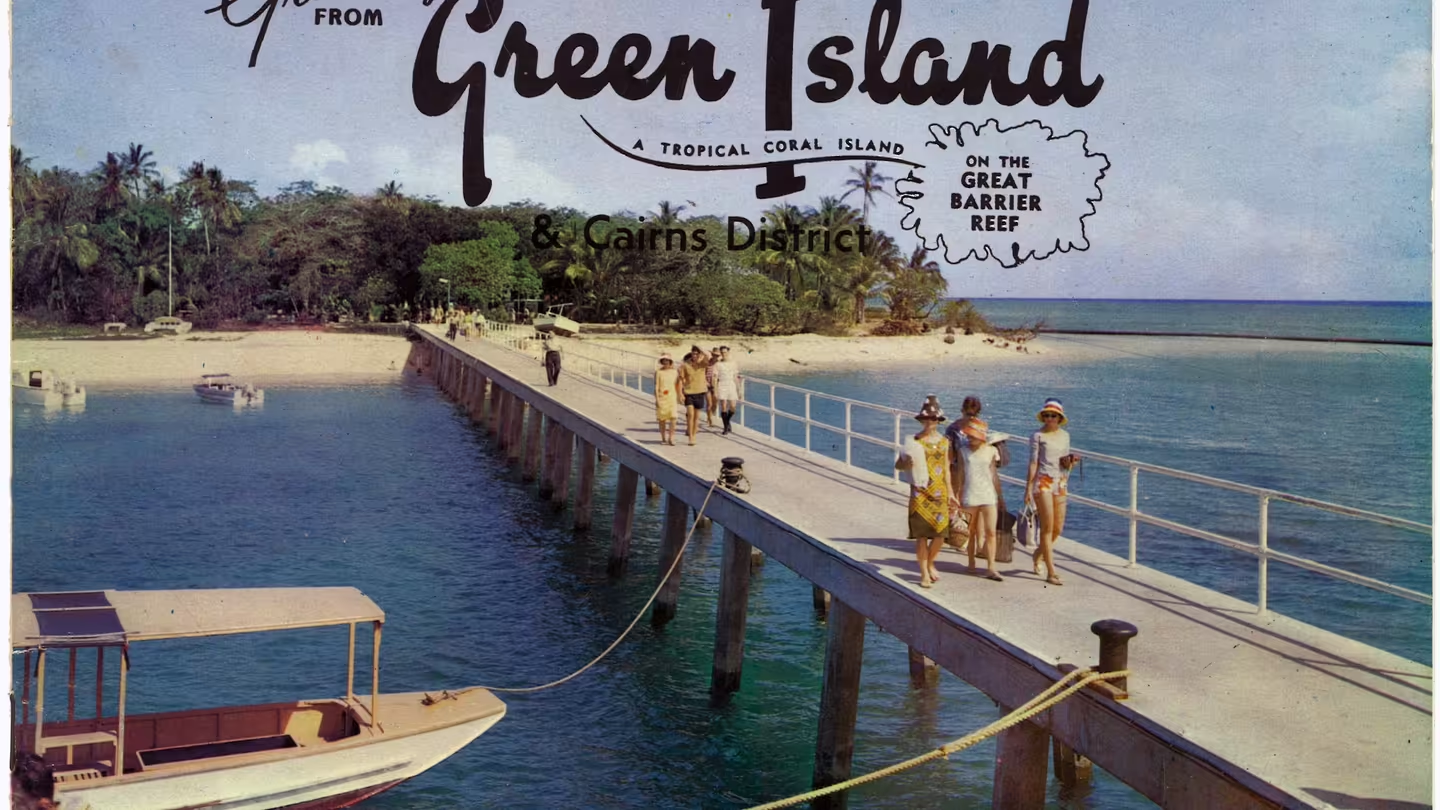
A public jetty was constructed, making it easier for vessels to transport passengers and supplies.
The island was becoming increasingly popular for picnics, fishing and recreational visits.
During the following decades, further improvements were made to access and facilities.
A replacement jetty was constructed in 1931, helping accommodate the growing number of visitors.
By this stage, Green Island was no longer simply a remote fishing location. It was developing into an established recreational destination.
7. 1924: The Hayles Family Begins Regular Tourist Cruises
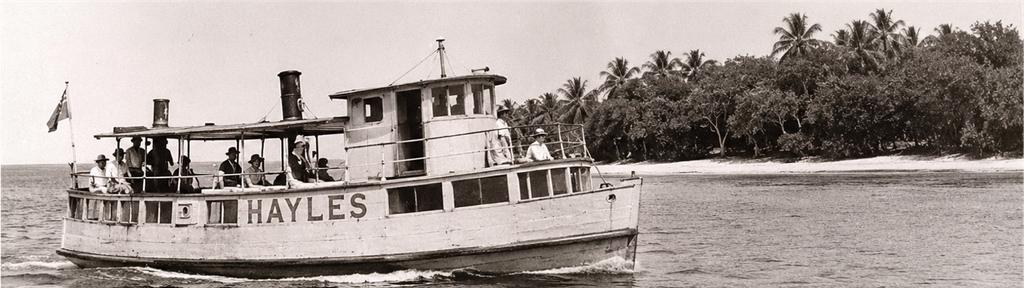
Perhaps no family has had a greater influence on the early tourism development of Green Island than the Hayles family.
The family had already established a marine transport business in Queensland and recognised the potential for regular passenger services to popular coastal destinations.
In 1924, the Hayles company commenced a fortnightly passenger ferry service between Cairns and Green Island.
This was a significant development because it gave visitors a more reliable way to reach the island.
Previously, most visitors had relied on private boats or less regular excursion services.
The new ferry service helped establish Green Island as a genuine holiday destination rather than simply an occasional picnic location.
The Hayles family would go on to become responsible for several important innovations in reef tourism, helping establish a legacy that continues through Great Adventures today.
The year 2024 marked 100 years of regular tourist cruises between Cairns and Green Island.
8. 1930: Noel and Kitty Monkman Arrive on Green Island
One of the most interesting chapters in Green Island’s history began around 1930 when Noel and Kitty Monkman moved to the island.
The couple became pioneers of underwater photography and filmmaking, helping introduce the underwater world of the Great Barrier Reef to people who had never seen it before.
At the time, underwater photography was an extremely specialised activity.
Cameras and equipment were cumbersome, waterproofing was difficult and filming beneath the surface presented enormous technical challenges.
The Monkmans dedicated themselves to capturing the extraordinary marine life surrounding Green Island.
Their work included underwater photographs and films featuring tropical fish, coral formations and other reef creatures.
Their contribution helped promote the Great Barrier Reef long before underwater footage became commonplace on television and the internet.
During World War II, Noel and Kitty also served as volunteer air observers on Green Island, helping monitor activity around the region.
Their legacy would continue for decades through the establishment of an underwater cinema on the island.
9. 1937: The World’s First Glass-Bottom Boat
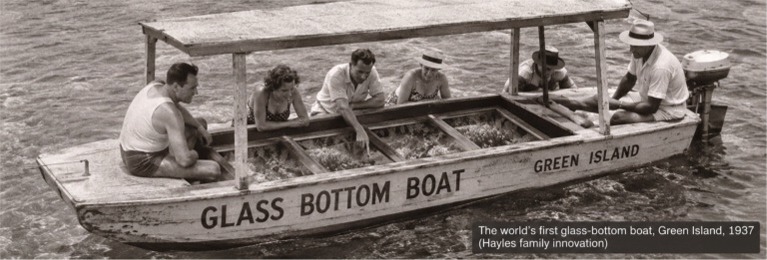
Perhaps the most famous innovation in Green Island’s history is the invention of the glass-bottom boat.
In 1937, the Hayles family introduced what is widely recognised as the world’s first glass-bottom boat at Green Island.
The original vessel was surprisingly simple.
It was a small wooden dinghy fitted with glass viewing sections that allowed passengers to look down into the water and observe the coral reef beneath them.
The concept was revolutionary for its time.
Previously, visitors generally needed to enter the water or lean over the side of a boat to see the underwater environment.
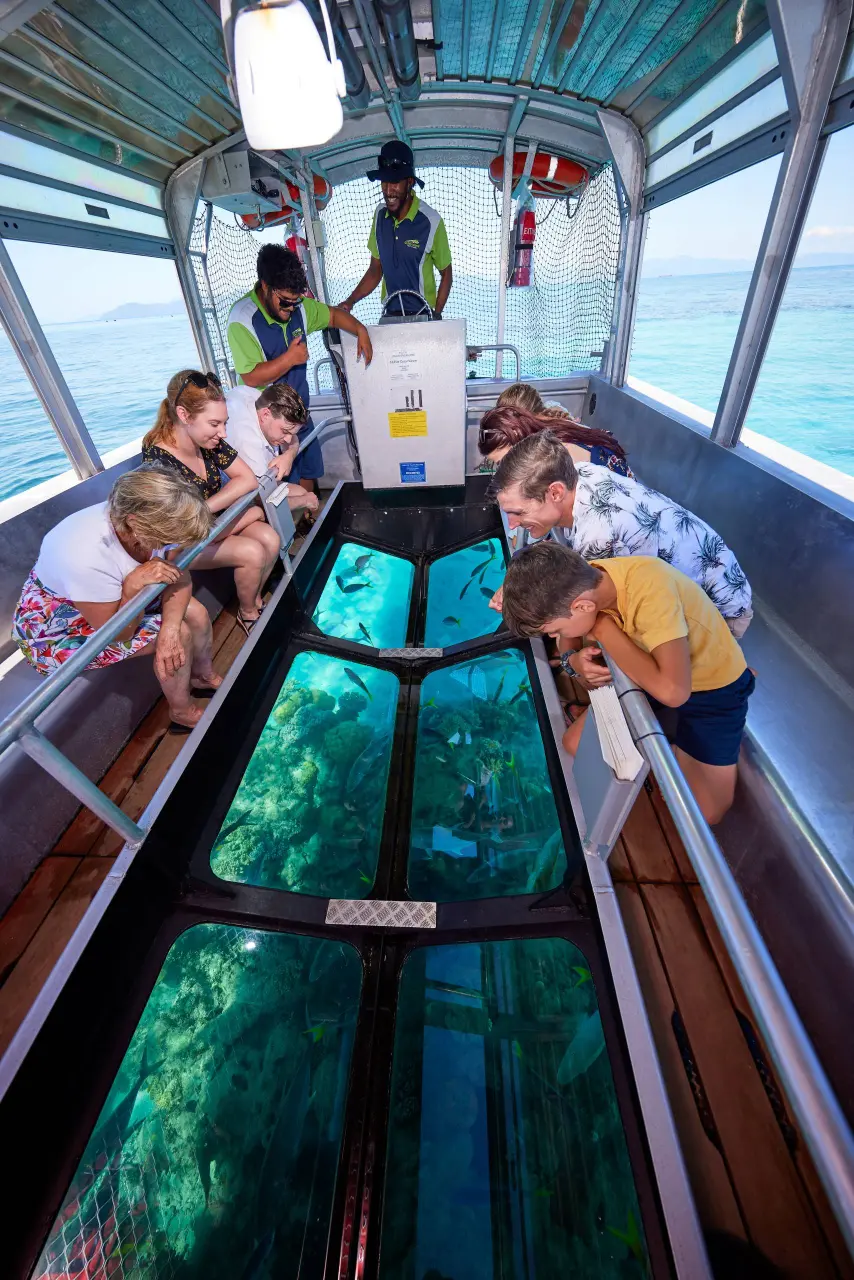
The glass-bottom boat allowed people to experience the Great Barrier Reef without getting wet.
It was particularly useful for families, older visitors and people who could not swim or were uncomfortable entering the ocean.
The innovation quickly became popular, and the concept was subsequently developed into more sophisticated vessels.
In 1948, an improved design was introduced with glass panels incorporated into the floorboards, providing passengers with a better viewing experience.
Glass-bottom boats eventually became a familiar feature of marine tourism around the world.
Green Island can rightly claim an important place in the history of this now-famous tourism experience.
10. 1937: Green Island Becomes Queensland’s First Island National Park
Another important development occurred in 1937 when Green Island was declared a National Park.
The designation helped protect the island’s natural environment, including its tropical vegetation and surrounding reef.
This was particularly important as the island was becoming increasingly popular with visitors and tourism businesses.
The following year, the Hayles company received a tourism development lease, providing an opportunity to establish more substantial visitor facilities.
The early development of accommodation and tourism infrastructure would eventually lead to the construction of the Coral Cay Hotel.
The decision to protect Green Island while allowing carefully managed tourism development helped establish the model that continues today.
11. The 1940s: The Coral Cay Hotel and the Development of Island Accommodation
During the early 1940s, the Hayles company developed the first Coral Cay Hotel on Green Island.
This was a major step in the island’s transformation from a day-trip destination into a place where visitors could stay overnight.
The hotel provided basic accommodation for people wishing to spend more time exploring the island and surrounding reef.
The development was particularly important because travelling to Green Island was still a significant undertaking.
Visitors who wanted to experience sunrise, sunset and the quieter atmosphere of the island could now stay overnight.
World War II interrupted the development of tourism throughout Australia, but Green Island retained its importance as a regional landmark.
Following the war, tourism began expanding again as transport improved and more Australians became interested in exploring the Great Barrier Reef.
12. 1954: The World’s First Stationary Underwater Observatory
Another extraordinary world-first development occurred in 1954 when the Green Island Underwater Observatory opened.
The project was developed by local entrepreneurs Vince Vlasoff and Lloyd Grigg.
The observatory was constructed using an underwater diving chamber that had originally been used during World War II.
It was converted into a viewing facility and installed underwater at the end of Green Island’s jetty.
Visitors could descend below the waterline and observe the reef through large glass viewing windows.
The chamber was approximately 10 metres long and featured 22 viewing ports.
It provided a completely different way to experience the Great Barrier Reef.
Instead of looking through the bottom of a boat, visitors could sit below the surface and watch fish and other marine life swimming around them.
The attraction became an important part of Green Island’s identity and helped establish its reputation for marine tourism innovation.
The underwater observatory was particularly popular with people who wanted to see the reef without swimming or snorkelling.
It attracted significant media attention and became an important promotional feature for Green Island.
Although the original observatory was eventually closed to visitors in 2012 because of its structural condition, it remains an important part of the island’s tourism history.
13. 1961: The Great Barrier Reef Theatre Opens
Another pioneering attraction was introduced in 1961 when Noel and Kitty Monkman’s Great Barrier Reef Theatre opened on Green Island.
The theatre allowed visitors to watch underwater films showing the extraordinary marine life of the Great Barrier Reef.
At a time when relatively few people owned cameras capable of underwater photography, these films provided a unique opportunity to see what existed beneath the ocean’s surface.
Visitors could watch colourful reef fish, coral formations and marine creatures in their natural environment.
The theatre helped introduce generations of visitors to the underwater world and complemented the glass-bottom boats and underwater observatory.
It operated until 1992, making it a long-standing part of Green Island’s tourism history.
14. 1961–1964: Marineland Melanesia and the Crocodile Farm
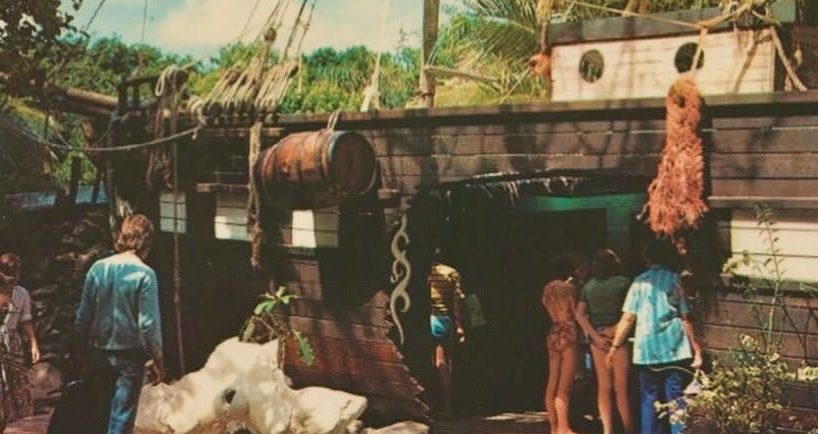
Green Island developed another unusual attraction during the 1960s with the establishment of a crocodile farm.
The facility was opened in 1964 by Vince Vlasoff and Lloyd Grigg, the same entrepreneurs responsible for the underwater observatory.
It was the first crocodile farm established on an island and provided visitors with an opportunity to see crocodiles at close range.
The attraction was later renamed Marineland Melanesia in 1971–1972.
In 1972, the facility came under the management of George and Shirley Craig, who became closely associated with its ongoing operation.
Marineland Melanesia developed into more than simply a crocodile attraction.
It incorporated a museum and aquarium, providing visitors with opportunities to learn about crocodiles, marine animals and the natural history of the region.
It remains one of the longest-running privately operated attractions on Green Island.
Its history is particularly interesting because it demonstrates how the island developed a range of attractions beyond traditional reef tourism.
15. 1963: The Coral Cay Hotel Is Redeveloped
The original Coral Cay Hotel was eventually replaced by a larger and more sophisticated accommodation facility.
The redeveloped hotel opened in 1963 and was subsequently known as the Green Island Reef Resort.
It provided accommodation for visitors who wanted to experience the island over several days rather than simply take a day trip.
The resort helped establish Green Island as an overnight holiday destination and attracted both Australian and international visitors.
The island’s popularity continued growing throughout the 1960s and 1970s.
Its combination of rainforest, beaches, reef experiences and accommodation made it one of the most distinctive destinations on the Great Barrier Reef.
16. 1970: Queen Elizabeth II Visits Green Island
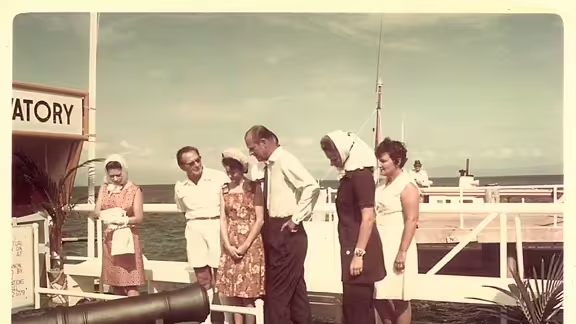
One of the most memorable events in Green Island’s history occurred in 1970 when Queen Elizabeth II visited the island.
The visit formed part of her Australian tour and was associated with the bicentenary of Captain James Cook’s voyage along the east coast of Australia.
The Queen’s visit attracted considerable attention and helped place Green Island in the national spotlight.
The underwater observatory was among the island’s notable attractions, and the royal visit became an important historical milestone.
For a small coral cay off Cairns, welcoming the reigning British monarch was certainly an extraordinary occasion.
17. 1974: Green Island Becomes a Marine National Park
Environmental protection became increasingly important as tourism and other activities expanded around the Great Barrier Reef.
In 1974, the Queensland Government declared Green Island Reef a Marine National Park.
This helped protect the surrounding marine environment and establish controls over activities that could affect the reef.
The Great Barrier Reef Marine Park was subsequently established, and in 1981 the Great Barrier Reef was inscribed on the UNESCO World Heritage List.
These developments were particularly important for Green Island because its tourism industry depended heavily on the health of the surrounding reef ecosystem.
The island was now part of an internationally recognised natural environment with increasing conservation responsibilities.
18. 1978–1988: Changing Ownership and the Development of Great Adventures
During the late 1970s and 1980s, Green Island’s tourism industry continued to evolve.
The Hayles family remained an important part of the island’s commercial history, but the business eventually changed hands.
In 1982, daily fast catamaran services commenced between Cairns and Green Island, significantly improving the speed and convenience of travelling to the island.
This was an important development because it allowed larger numbers of visitors to experience Green Island within a single day.
In 1988, Dreamworld Corporation acquired the Green Island Reef Resort and ferry operations from Hayles Pty Ltd.
The tourism operation was renamed Great Adventures.
This marked the end of the Hayles family’s direct ownership of the Green Island tourism operation, although their legacy remained central to its identity.
Great Adventures continued developing the island’s day visitor facilities and reef experiences.
19. 1989–1994: A New Resort and a Major Redevelopment
By the late 1980s, the existing Green Island Reef Resort was ageing and required significant redevelopment.
The resort closed in 1989 due to its deteriorating condition.
In 1991, Daikyo Australia purchased the resort and associated Green Island tourism operations from Dreamworld Corporation.
A major redevelopment project followed, involving improvements to the resort and the island’s day visitor facilities.
The new Green Island Resort was designed to provide a more environmentally sensitive accommodation experience.
Day visitor facilities reopened in 1993, allowing tourism operations to resume while redevelopment continued.
In 1994, the new Green Island Resort officially opened.
The reported development cost was approximately $43 million, making it a substantial investment in the island’s tourism infrastructure.
The new resort provided modern accommodation while incorporating environmental considerations into its design and operation.
It represented a major change from the original Coral Cay Hotel and established the modern overnight tourism experience that Green Island is known for today.
20. 2005: The Quicksilver Group Acquires Green Island
Another major change in Green Island’s commercial history occurred in 2005.
The Quicksilver Group acquired Great Adventures and Green Island Resort from Daikyo Australia.
This brought Green Island into one of Queensland’s major marine tourism organisations.
The acquisition helped strengthen the island’s connections with the wider Cairns and Port Douglas reef tourism industry.
Great Adventures continued operating its ferry services and day visitor experiences, while Green Island Resort provided overnight accommodation.
The combination allowed the island to cater for different types of visitors, from short day trips to extended stays.
The Quicksilver Group has continued investing in vessels, visitor facilities and environmental management.
21. 2012: The Underwater Observatory Closes
One of Green Island’s most famous historical attractions reached the end of its operational life in 2012.
The pioneering underwater observatory, which had opened in 1954, was closed to the public because of its deteriorating structural condition.
Despite attempts to assess its future, it was considered unsuitable for restoration and continued public use.
Its closure marked the end of an extraordinary chapter in the history of reef tourism.
For almost six decades, the observatory had allowed visitors to experience the underwater world without entering the water.
Although no longer operating as a visitor attraction, it remains an important reminder of the innovative people who helped establish Green Island as a world leader in marine tourism.
22. 2017: Green Island Embraces Solar Energy
Environmental sustainability has become increasingly important in the operation of Green Island Resort.
In 2017, the resort introduced solar power to supplement its existing electricity generation.
Further renewable energy installations followed during 2019.
Operating an accommodation facility on a small coral cay presents unique challenges.
Freshwater, electricity, waste management and the protection of the surrounding marine environment all require careful planning.
The resort also operates a desalination plant, commissioned in 2001, which produces freshwater for the island.
These initiatives demonstrate the importance of reducing the environmental footprint of tourism operations in sensitive reef environments.
23. 2024: Green Island Celebrates 100 Years of Regular Tourist Cruises
In September 2024, Green Island celebrated a major milestone: 100 years of regular tourist cruises from Cairns.
The anniversary marked the beginning of the Hayles family’s fortnightly passenger service in 1924.
Great Adventures and Green Island Resort celebrated the occasion with commemorative postcards and a specially constructed Green Island post box.
The celebration provided an opportunity to reflect on the island’s remarkable history and the contribution made by generations of tourism operators.
From a small wooden ferry operating every second Sunday to modern high-speed catamarans carrying large numbers of visitors, the development of transport to Green Island has been extraordinary.
The anniversary also recognised the Hayles family’s contribution to Australian marine tourism and the many innovations that originated on the island.
24. Green Island Today
Today, Green Island remains one of the most popular destinations on the Great Barrier Reef.
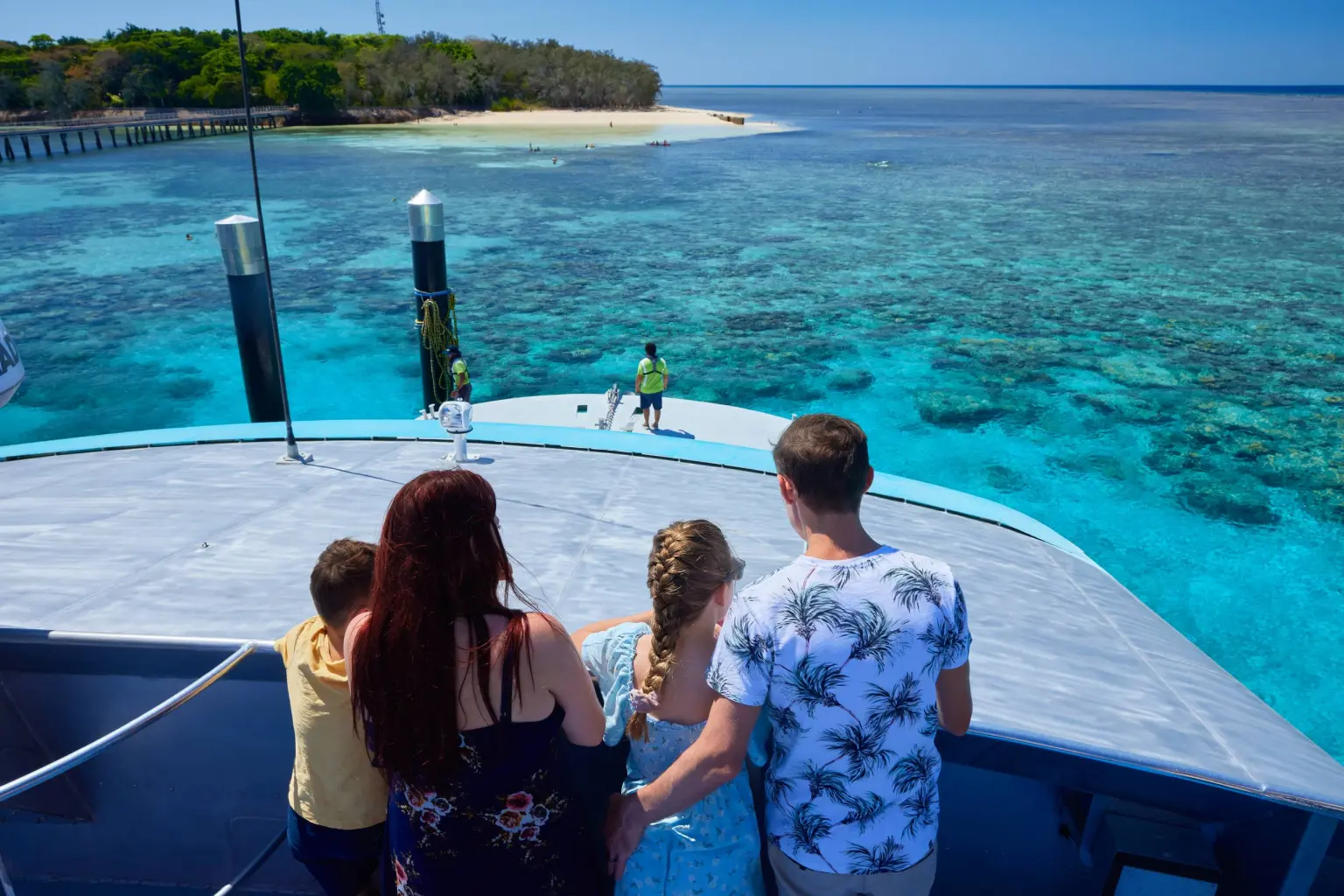
The island continues to attract visitors interested in its combination of tropical rainforest, white sandy beaches and surrounding coral reefs.
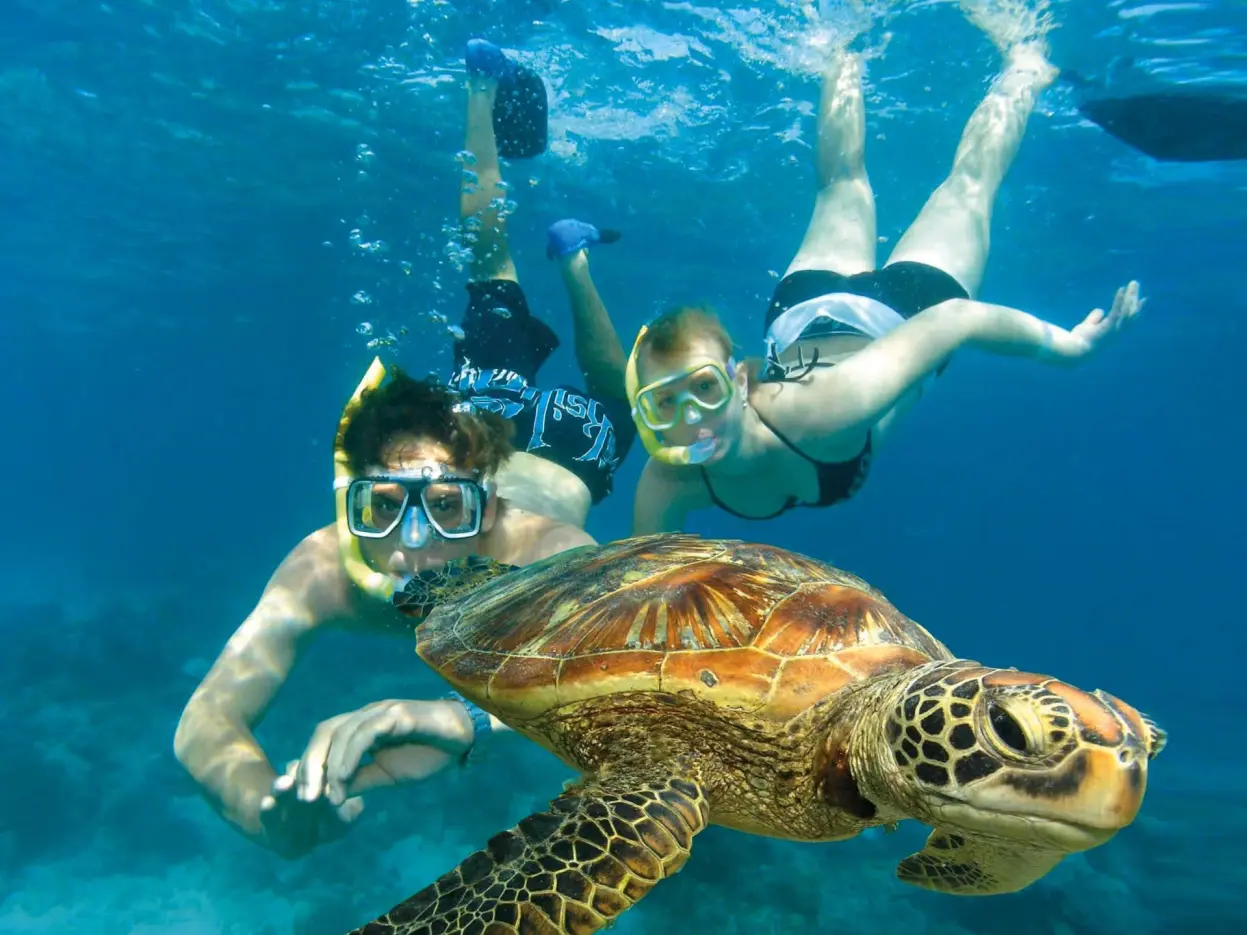
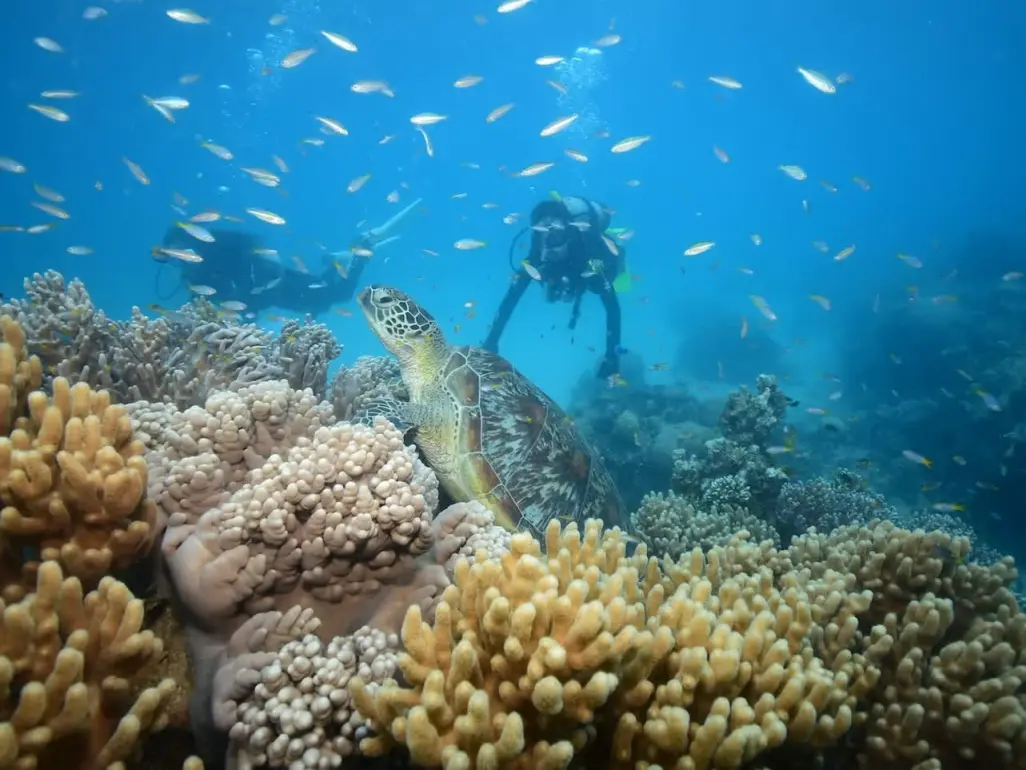
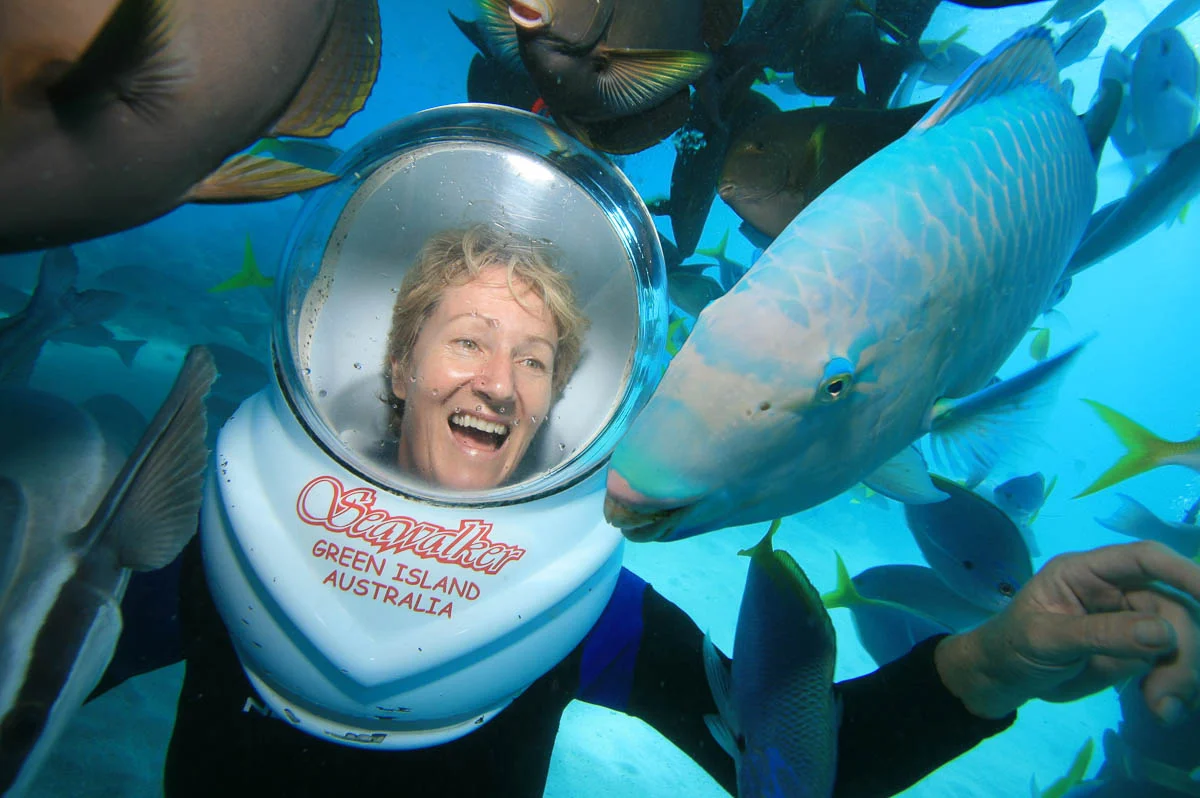
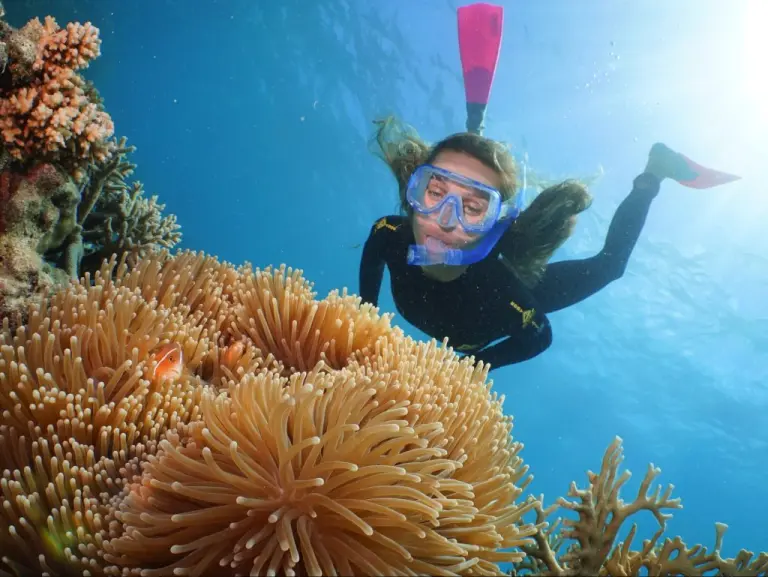
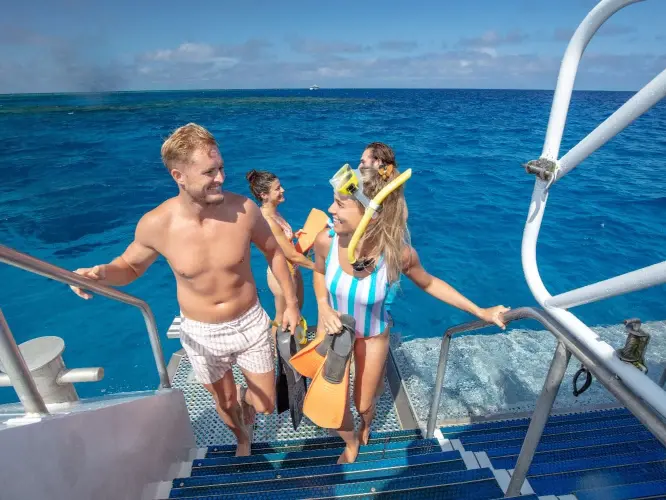
The modern tourism operation includes day visitor facilities, ferry services, snorkelling, diving, glass-bottom boat experiences and overnight accommodation.
Green Island Resort continues operating as the island’s accommodation facility, while Great Adventures provides regular passenger services and reef experiences.
Marineland Melanesia also continues its long-standing presence on the island.
Despite the considerable changes that have occurred over the past century, Green Island has retained much of its natural character.
Its rainforest, beaches and surrounding coral reef remain the primary attractions.
The island is also protected as part of the Great Barrier Reef World Heritage Area, with conservation and environmental management playing an important role in its future.
25. Interesting Facts About Green Island’s History
Green Island has an extraordinary collection of historical milestones. Here are some of the most interesting:
- Its traditional name is Wunyami: The island is part of the traditional sea country of the Guru-Gulu Gungandji people.
- Captain Cook named the island: It was recorded on his charts in June 1770 and named after astronomer Charles Green.
- It had a sea cucumber industry: A beche-de-mer processing station was established during the 1850s.
- Coconut trees were planted in 1889: They provided food and shelter for possible shipwreck survivors.
- Tourism began surprisingly early: Organised pleasure cruises to Green Island were operating around 1890.
- The Hayles family started regular ferry services in 1924: This year marked the beginning of a century of regular tourist cruises from Cairns.
- The world’s first glass-bottom boat was introduced in 1937: The original design was a small wooden dinghy with glass viewing sections.
- Green Island became a National Park in 1937: It was one of Queensland’s earliest island national parks.
- The world’s first stationary underwater observatory opened in 1954: It allowed visitors to observe the reef from below the surface.
- Noel and Kitty Monkman pioneered underwater filmmaking: Their work helped introduce the Great Barrier Reef to a much wider audience.
- Queen Elizabeth II visited in 1970: The royal visit became one of the island’s most memorable historical events.
- It had an island crocodile farm: Marineland Melanesia opened in 1964 and remains an important part of the island’s history.
- The modern resort opened in 1994: The redevelopment represented an investment of approximately $43 million.
- The underwater observatory closed in 2012: After almost 60 years, its structural condition made it unsuitable for continued public use.
- 2024 marked 100 years of regular tourist cruises: The anniversary celebrated a century of passenger services between Cairns and Green Island.
Conclusion: An Island With a Remarkable History
Green Island is much more than a beautiful tropical island surrounded by the Great Barrier Reef.
Its history reflects the development of Far North Queensland, from traditional Indigenous sea country and nineteenth-century fishing operations to the beginnings of organised tourism and the development of a modern international destination.
It was home to some of Australia’s earliest marine tourism entrepreneurs and became the birthplace of innovations that would eventually be adopted around the world.
The glass-bottom boat, underwater observatory and pioneering underwater films all helped change the way people experienced coral reefs.
The Hayles family, Noel and Kitty Monkman, Vince Vlasoff, Lloyd Grigg and the many other people associated with Green Island played important roles in establishing its reputation.
Today, visitors can still experience the same extraordinary natural environment that attracted the first recreational visitors more than a century ago.
Perhaps the most remarkable thing about Green Island is that this tiny coral cay has had such an enormous influence on the history of Great Barrier Reef tourism.
From its earliest days as a fishing and picnic destination to its position as one of Australia’s best-known reef islands, Green Island has a story that deserves to be remembered.