The Irukandji jellyfish is one of Australia’s most fascinating and potentially dangerous marine creatures. Despite being among the smallest jellyfish found in Australian waters, it possesses an extraordinarily powerful venom capable of causing severe illness and, in rare cases, death.
Found predominantly in the tropical waters of northern Australia, Irukandji jellyfish are particularly well known in Queensland, where they have become an important subject of marine biology and medical research.
What makes these tiny creatures especially concerning is that their sting can initially be almost painless. A person may enter the water without realising they have been stung, only to develop severe symptoms some 20 to 40 minutes later. This unusual reaction is known as Irukandji Syndrome.
But there is much more to this remarkable animal than its dangerous reputation. Scientists are still learning about its life cycle, behaviour, venom and the environmental conditions that influence its distribution.
1. What is an Irukandji Jellyfish?
The Irukandji jellyfish belongs to a group of marine animals known as box jellyfish, scientifically classified within the class Cubozoa.
The species most commonly associated with Irukandji Syndrome is Carukia barnesi, named after Australian marine scientist Jack Barnes, who identified the animal responsible for the mysterious illness in the 1960s.
The name Irukandji actually refers to a group of small box jellyfish capable of producing the characteristic syndrome, rather than just one individual species.
Several other species have since been identified as capable of causing similar reactions, including:
- Carukia barnesi
- Carukia shinju
- Malo maxima
- Malo kingi
- Alatina mordens
- Carybdea xaymacana
- Morbakka fenneri
These species belong to related groups of box jellyfish and vary in appearance, size and distribution.
Although they are related to the much larger Australian box jellyfish, Chironex fleckeri, they should not be confused with it. They have different physical characteristics and produce different patterns of envenomation.
2. What Does an Irukandji Jellyfish Look Like?
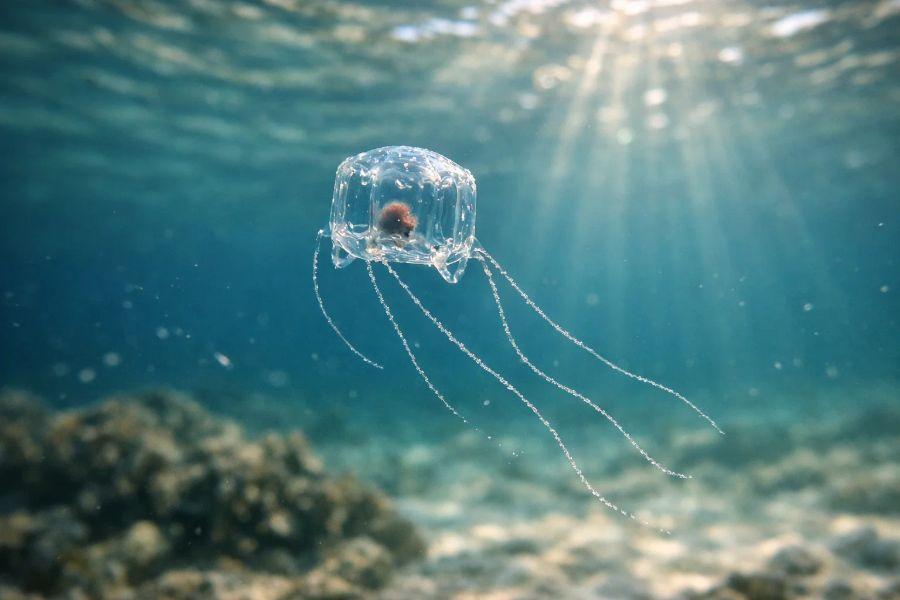
One of the most remarkable characteristics of the Irukandji jellyfish is its extremely small size.
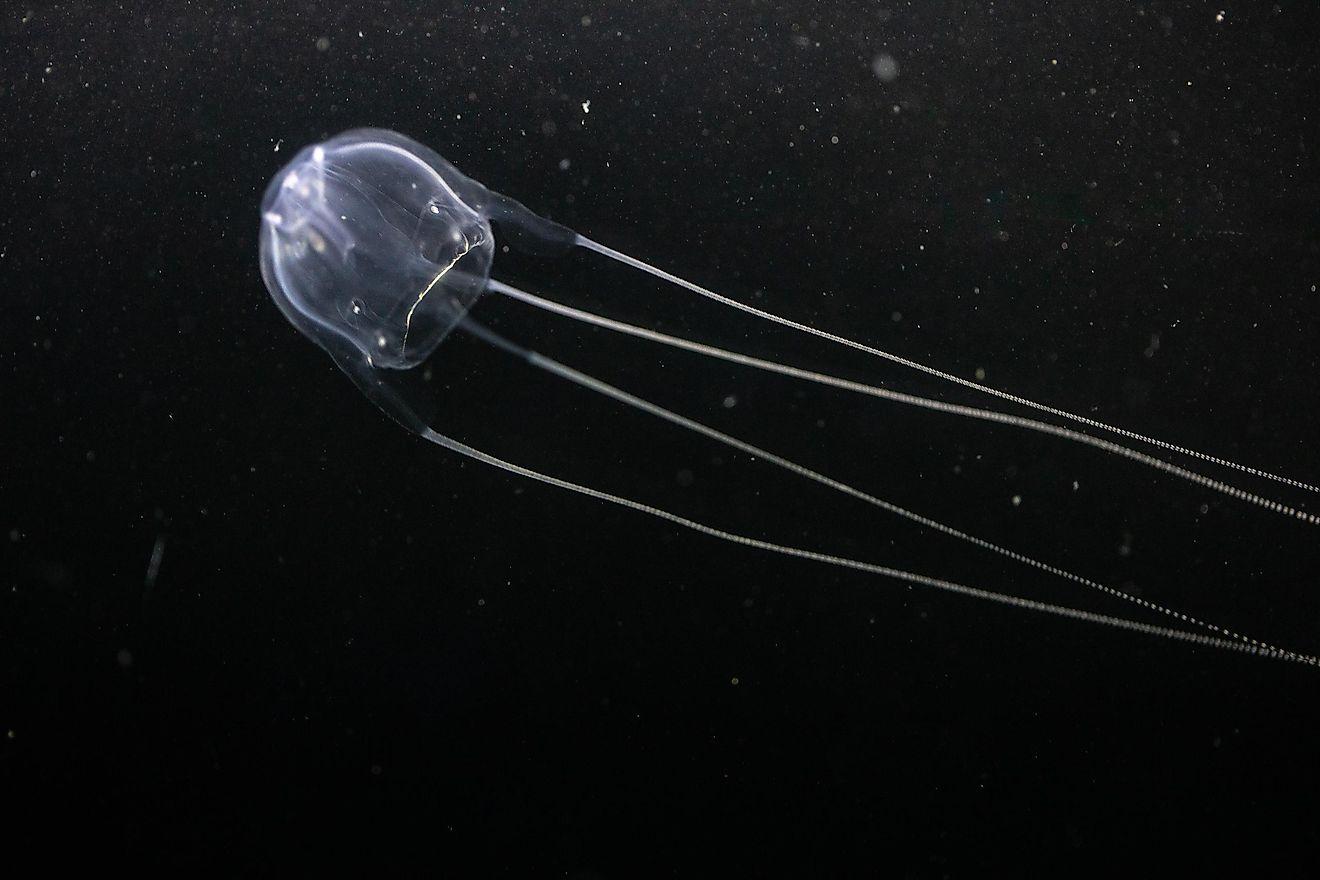
The bell of a typical Carukia barnesi measures approximately 1–2 centimetres across. Its body is transparent or almost colourless, making it extraordinarily difficult to see in open water.
The jellyfish has a roughly cube-shaped bell, four tentacles extending from the corners and delicate structures associated with its nervous and sensory systems.
Depending on the species, its tentacles can be considerably longer than its body. Some Irukandji-type jellyfish have tentacles extending many centimetres, making the animal potentially capable of contacting a person without being noticed.
Unlike many familiar jellyfish, which have a large umbrella-shaped body and numerous trailing tentacles, the Irukandji is compact and relatively simple in appearance.
Its transparency provides effective camouflage in the ocean, allowing it to drift through the water column with little visual distinction from its surroundings.
This combination of small size, transparency and powerful venom makes it a particularly unusual marine animal.
3. Where Are Irukandji Jellyfish Found?
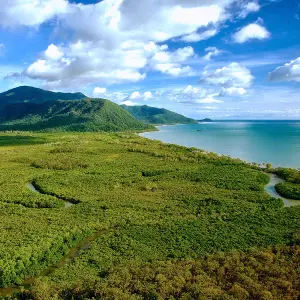
Irukandji jellyfish are primarily associated with tropical Australian waters, particularly along the northern coastline.
Their distribution includes:
- Queensland
- Northern Territory
- Northern Western Australia
- Parts of the Coral Sea
- Offshore reef environments
- Some subtropical waters further south
The waters surrounding Cairns and the northern Great Barrier Reef are particularly well known for Irukandji research and recorded stings.
However, it is important to understand that Irukandji jellyfish are not restricted to shallow coastal waters. Some species are found offshore, including around islands and coral reef systems.
Research suggests that Carukia barnesi spends much of its adult life in deeper offshore environments, although individuals can be transported towards the coast by currents and changing environmental conditions.
Their distribution is influenced by a combination of water temperature, ocean currents, wind conditions, seasonal changes and other environmental factors.
Scientists continue to investigate these relationships to better understand when and where Irukandji jellyfish are most likely to occur.
4. When Is Irukandji Season?
In northern Queensland, Irukandji jellyfish are generally associated with the warmer months, particularly the period commonly referred to as marine stinger season.
This usually runs from approximately November through to May, although jellyfish can be present outside these months.
Warmer water temperatures, seasonal rainfall, wind patterns and changing ocean currents can all influence jellyfish distribution.
It is important to recognise that there is no guaranteed period when tropical Australian waters are completely free of Irukandji jellyfish.
Even during cooler months, the possibility of encountering marine stingers cannot be entirely ruled out.
Research published in 2022 by scientists at James Cook University investigated the environmental factors associated with the occurrence and abundance of Carukia barnesi. The study highlighted the importance of environmental conditions in understanding the distribution of this species.
5. How Does the Irukandji Jellyfish Sting?
Like other jellyfish, Irukandji use specialised microscopic structures called nematocysts to capture prey and defend themselves.
Nematocysts are tiny stinging capsules found in specialised cells known as cnidocytes.
When triggered by physical or chemical contact, these capsules discharge a microscopic, harpoon-like structure that penetrates the target and delivers venom.
An interesting feature of Irukandji jellyfish is that stinging cells are found not only on their tentacles but also on their bell.
This means that contact with different parts of the animal can potentially cause envenomation.
The amount of venom delivered depends on several factors, including the species, the number of stinging cells discharged and the area of skin contacted.
A sting may leave little visible evidence, and the initial sensation can be surprisingly mild.
This is one of the reasons Irukandji stings can be particularly difficult to recognise immediately.
6. What Is Irukandji Syndrome?
Irukandji Syndrome is the name given to the collection of severe symptoms that can develop following a sting from certain species of small box jellyfish.
The condition was first formally described in 1952 by Australian doctor Hugo Flecker, who named it after the Indigenous Irukandji people of the Cairns region.
Unlike many other jellyfish stings, which produce immediate and obvious skin pain, an Irukandji sting can initially feel like a minor irritation.
The more serious symptoms generally develop after a delay, commonly between 20 and 40 minutes, although the timing can vary.
Symptoms can include:
- Severe pain in the lower back
- Intense muscle cramps
- Abdominal pain
- Chest tightness
- Headaches
- Nausea and vomiting
- Heavy sweating
- Restlessness and agitation
- Increased heart rate
- Very high blood pressure
- A feeling of impending doom
In more serious cases, the venom can cause significant cardiovascular complications, including heart dysfunction and fluid accumulation in the lungs.
Medical treatment and hospital observation are essential because symptoms can become severe even when the original sting appears relatively insignificant.
7. Why Is Irukandji Venom So Dangerous?
The venom of Irukandji jellyfish contains a complex mixture of biologically active compounds that affect the human nervous and cardiovascular systems.
Although researchers are still investigating the precise mechanisms, the venom is believed to trigger the release of large quantities of stress-related chemicals called catecholamines.
These include adrenaline and noradrenaline.
Under normal circumstances, these chemicals help regulate the body’s response to stress, controlling heart rate, blood pressure and other functions.
However, the excessive release associated with Irukandji envenomation can produce an extreme physiological response.
This can cause:
- Rapid increases in blood pressure
- Elevated heart rate
- Severe muscular pain
- Intense sweating
- Cardiovascular stress
- Potential heart complications
In severe cases, the resulting strain on the cardiovascular system can become life-threatening.
Interestingly, researchers have found that Irukandji venom is not necessarily comparable to the venom of other jellyfish, despite their close biological relationship.
The unusual combination of delayed symptoms and intense systemic effects makes Irukandji Syndrome an important subject of medical toxicology research.
8. The Life Cycle of an Irukandji Jellyfish
The life cycle of an Irukandji jellyfish is more complicated than many people realise.
Like other box jellyfish, it has several distinct developmental stages.
The adult jellyfish, known as the medusa, is the familiar free-swimming stage found in the ocean.
However, before reaching adulthood, the animal develops through an earlier stage known as a polyp.
The general life cycle involves:
Egg and fertilisation
Adult jellyfish reproduce sexually, producing fertilised eggs that develop into larvae.
Planula larva
The fertilised egg develops into a tiny swimming larva known as a planula.
Polyp stage
The larva eventually settles onto a suitable surface and develops into a small attached polyp.
Polyps are very different from the familiar jellyfish form. They are stationary and live attached to a surface.
Medusa development
The polyp undergoes a transformation known as metamorphosis, producing a juvenile jellyfish.
Adult medusa
The juvenile develops into a mature, free-swimming jellyfish capable of reproduction.
Researchers at James Cook University have conducted significant work investigating the life cycle, prey capture and environmental tolerances of Carukia barnesi.
Despite these advances, many aspects of its reproduction and natural behaviour remain poorly understood.
9. What Do Irukandji Jellyfish Eat?
Irukandji jellyfish are predators that feed on small marine organisms.
Their diet is believed to include tiny crustaceans, zooplankton and other small animals found drifting through the water column.
Like other jellyfish, they use their tentacles and stinging cells to capture prey.
Once an organism comes into contact with a tentacle, the nematocysts discharge venom, helping immobilise the prey.
The captured animal is then transported towards the mouth, which is located underneath the bell.
Their feeding habits are still being investigated, partly because their small size and offshore habitat make them difficult to observe in their natural environment.
Research into their prey capture behaviour helps scientists understand their ecological role and the environmental conditions required for their survival.
10. How Fast Can an Irukandji Jellyfish Swim?
Irukandji jellyfish are not powerful swimmers in the same way as fish or larger marine animals.
They move through the water using rhythmic contractions of their bell, which propel them forward.
However, ocean currents and water movement are also important factors in determining their position.
Their relatively small size means they can be transported considerable distances by changing currents.
This is one reason why jellyfish populations can sometimes appear in coastal waters even when their preferred habitat is further offshore.
Their movement is influenced by:
- Ocean currents
- Wind-driven surface water movement
- Water temperature
- Depth
- Tidal conditions
- Their own swimming activity
Scientists are still learning how individual species respond to these environmental conditions.
11. Can Irukandji Jellyfish Kill Humans?
Yes. Irukandji stings can be fatal, although deaths are uncommon.
The greatest danger is the potentially severe effect of the venom on the cardiovascular system.
A person who has been stung may initially feel relatively well, only to develop serious symptoms later.
Severe cases can involve dangerously elevated blood pressure, cardiac complications and pulmonary oedema, a condition in which fluid accumulates in the lungs.
Medical treatment generally involves hospital assessment, close monitoring, pain management and treatment of cardiovascular complications where necessary.
There is currently no specific antivenom routinely available for Irukandji envenomation.
Early medical attention is extremely important.
Anyone who suspects they have been stung by an Irukandji jellyfish should leave the water, seek emergency assistance and follow current Australian marine-stinger first-aid guidance.
12. What Should You Do If You Are Stung?
Irukandji stings should always be treated seriously, even if the initial sensation is mild.
In Australian waters, the recommended response is to:
- Get the person out of the water as quickly and safely as possible.
- Call Triple Zero (000) for an ambulance.
- Follow the current Queensland marine-stinger first-aid instructions, including the use of vinegar for suspected tropical jellyfish stings.
- Avoid rubbing the affected area.
- Monitor the person’s breathing and level of consciousness.
- Be prepared to perform CPR if required and follow the emergency operator’s instructions.
- Ensure the person receives hospital assessment, even if symptoms have not yet developed.
Vinegar is used to help prevent unfired stinging cells from discharging additional venom. It does not neutralise venom that has already entered the skin.
Do not delay calling an ambulance while attempting first aid.
Medical guidance can change, so the latest advice from Queensland Health and emergency services should always take precedence.
13. How Can Irukandji Stings Be Prevented?
Although it is impossible to eliminate the risk entirely, several precautions can reduce the likelihood of being stung.
These include:
- Wearing a properly fitted full-body stinger suit when swimming in tropical waters.
- Avoiding swimming in areas where marine stinger warnings have been issued.
- Following local beach safety advice and warning signs.
- Swimming in designated areas where marine stinger precautions are in place.
- Avoiding contact with jellyfish, even if they appear dead or harmless.
- Taking extra care during the warmer months.
Protective clothing is particularly useful because Irukandji jellyfish are so small that they can be almost impossible to see in the water.
However, protective clothing does not guarantee complete protection. Exposed areas of skin can still be vulnerable.
14. Interesting Facts About Irukandji Jellyfish
Despite their dangerous reputation, Irukandji jellyfish are fascinating marine animals.
Here are some interesting facts:
1. They are incredibly small
The bell of a typical Carukia barnesi is only around 1–2 centimetres across.
2. They are almost invisible
Their transparent bodies make them exceptionally difficult to spot in the ocean.
3. They are box jellyfish
Despite their tiny size, they belong to the same broad class of jellyfish as the much larger Australian box jellyfish.
4. They can sting with their bell
Unlike many other jellyfish, their stinging cells are also found on the body of the animal.
5. Their sting can initially be painless
The first sensation may be so mild that the person does not realise they have been stung.
6. Symptoms are often delayed
Serious symptoms can take 20–40 minutes to develop.
7. Several species cause Irukandji Syndrome
The condition is associated with multiple species, not just Carukia barnesi.
8. They are difficult to study
Their tiny size, transparent bodies and offshore habitat make collecting and observing them challenging.
9. They have a polyp stage
Before becoming free-swimming jellyfish, they spend part of their life cycle attached to a surface.
10. They remain an important subject of scientific research
Scientists continue investigating their venom, life cycle, environmental requirements and distribution.
15. What Does the Future Hold for Irukandji Research?
Irukandji jellyfish remain an important subject of research in marine biology, environmental science and medical toxicology.
Scientists are particularly interested in understanding what causes fluctuations in their numbers and why they sometimes appear in coastal waters in greater numbers.
Climate change is another area of interest.
Changes in ocean temperature, currents and marine ecosystems could potentially influence the distribution and abundance of jellyfish.
Research published in 2022 by James Cook University scientists examined the environmental factors associated with the occurrence and abundance of Carukia barnesi.
More recent research has also investigated how environmental temperature and life stage may influence venom composition.
These studies demonstrate that there is still much to learn about these tiny but remarkably complex animals.
A better understanding of their biology could eventually improve forecasting, public safety measures and medical treatment.
Conclusion
The Irukandji jellyfish is one of Australia’s most unusual marine creatures. Its incredibly small size, transparent body and powerful venom make it a fascinating subject of scientific study.
Although it can cause serious illness, the Irukandji is also an important part of the marine ecosystem and deserves to be understood beyond its reputation as a dangerous stinger.
Ongoing research into its life cycle, behaviour, venom and environmental requirements is helping scientists build a clearer picture of this remarkable animal.
For anyone interested in Australia’s marine wildlife, the Irukandji is a powerful reminder that some of the ocean’s most extraordinary creatures are not necessarily the largest.
Scientific References and Further Reading
- Australian Museum – Irukandji (Carukia barnesi)
https://australian.museum/learn/animals/jellyfish/irukandji-carukia-barnesi/ - James Cook University – Life Cycle, Prey Capture Ecology and Physiological Tolerances of Carukia barnesi
https://researchonline.jcu.edu.au/49935/ - PLOS ONE – Environmental Drivers of the Occurrence and Abundance of the Irukandji Jellyfish (2022)
https://doi.org/10.1371/journal.pone.0272359 - Queensland Poisons Information Centre – Sea Creature Bites and Stings
https://www.poisonsinfo.health.qld.gov.au/bites-and-stings/sea-creature-bites-and-stings - National Library of Medicine – Irukandji Syndrome
https://www.ncbi.nlm.nih.gov/books/NBK562264/ - PubMed – Australian Carybdeid Jellyfish Causing Irukandji Syndrome
https://pubmed.ncbi.nlm.nih.gov/22361384/
Medical disclaimer: This article is intended for general educational purposes and is not a substitute for professional medical advice or emergency treatment. Suspected Irukandji stings require urgent medical assessment.